26 november 2026
How can European industry transition towards net zero by 2050?

Emma Zürcher
Senior beleidsmedewerker
Stel uw vraag
Meer informatie nodig? Stel uw vraag aan één van onze medewerkers

26 november 2026
Senior beleidsmedewerker
Meer informatie nodig? Stel uw vraag aan één van onze medewerkers
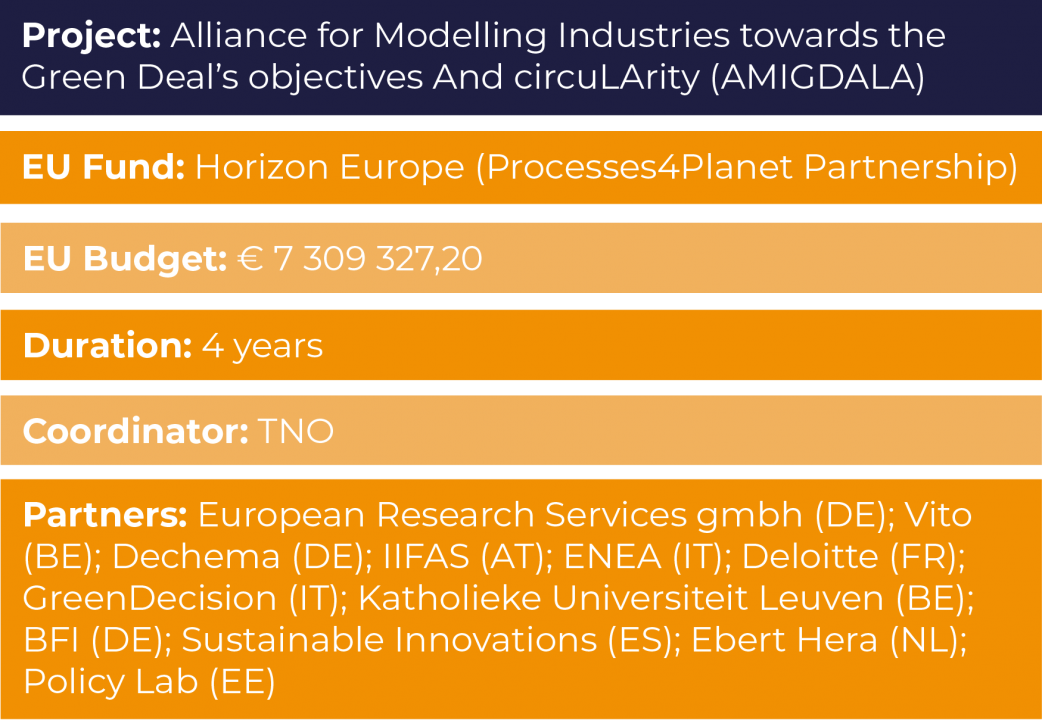
The European Union’s sustainability objectives require European industry to become cleaner: we need cleaner products, made in cleaner ways. At the same time, European leaders want to prevent this transition from pushing industry out of Europe. This is where the Horizon Europe-funded AMIGDALA project comes in. Using an integrated modelling approach, the project is defining pathways for Europe’s energy-intensive industries towards climate neutrality while keeping Europe resilient through their global competitiveness. Neth-ER spoke to Frank Wubbolts, Senior Consultant for ‘Clean Competitive Industry’ at TNO, and Andrea Rusman, Senior Project Manager ‘Materials Transition’ at TNO, to learn more about how this works in practice and what the impact of the project has been so far.

The European Green Deal introduced the goal of climate neutrality by 2050, and the European Climate Law made that goal legally binding, meaning that the EU economy must reach net-zero greenhouse gas emissions by the middle of this century. However, the road towards reaching this target is complex and uncertain. Industry stakeholders need to navigate their energy and feedstock transformation, while ensuring the profitability of their operations, and they must do so amid a shifting regulatory and investment landscape.
The AMIGDALA project addresses this challenge by providing policymakers and industry leaders with insights on possible pathways for the transition towards climate neutrality. The consortium, led by TNO, is modelling a range of future scenarios up to 2050 and 2070. To do so, it combines ten existing models, operating at global, EU and local levels, into a single integrated tool. These models cover, among other things, how the economy, trade, energy use, material flows and land use may develop over the coming decades. Linking the various models allows the researchers to show how developments in one domain affect the others and explore different options for climate-neutral industrial production. Coupling the models does, however, create a technical challenge. The integrated model is large and a full run takes a long time, which can slow down its use and limit wider uptake. The consortium is actively seeking to address this.
The project’s final product will be a decision dashboard for decisionmakers in government and industry, with indicators grouped under three headings: sustainability, competitiveness and resilience. Each user can set their own balanced preference of factors that make up the performance indicators. This allows stakeholders to obtain high-grade model outputs based on their preferences. In turn, decisionmakers can use relevant results easily to determine next steps. AMIGDALA will also produce transition scenarios and transition pathway projections that can be used by industry stakeholders to produce private-sector roadmaps.
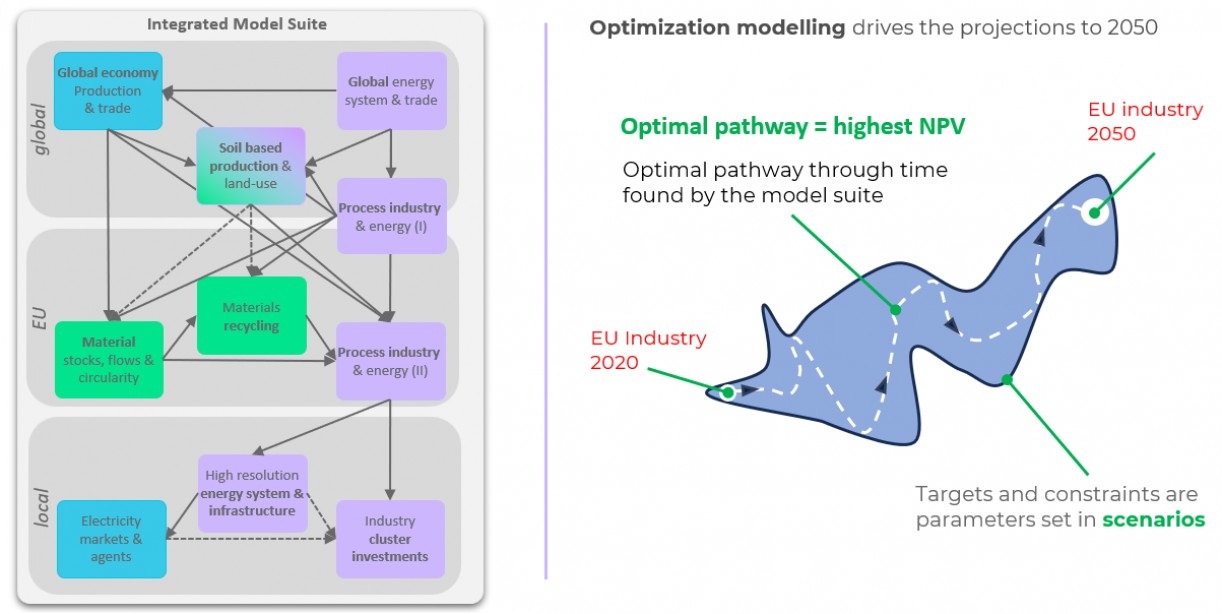
Example of the modelling approach
The project started in January 2024 and will run until the end of 2027. With just over a year to go, the consortium has already achieved impact in several ways. First, to ensure that the dashboard truly fits stakeholders’ needs, a draft version with transition pathways has been developed and will be presented to and discussed with stakeholders at a workshop in November. Furthermore, the project has already delivered modelling evidence on future scenarios. For example, for energy-intensive industries such as steel and chemicals, the project aims to show per scenario the relationship between demand and production from circular and primary resources, and trends in the development of trade relations. A key insight that has already emerged is that circular and renewable feedstock and energy will be less abundantly available in the future than fossil fuels are today. Each scenario has a different mix of energy carriers, but all scenarios require massive reinforcement of renewable electricity generation, storage and transport across Europe. AMIGDALA shows that under these conditions climate-neutral production is possible.
Wubbolts and Rusman emphasised that the project contributes to more than climate neutrality alone. The initial focus was on CO₂ reduction and renewable energy, in line with the Renewable Energy Directive. Throughout the lifetime of AMIGDALA, however, attention has shifted in part towards keeping industry in Europe, thereby strengthening EU resilience through industrial profitability and global competitiveness. In line with the Clean Industrial Deal, the modelling now also considers expanding towards including European origin requirements, lead markets and demand creation, as the focus of policymakers moves from sustainable production to include the sustainability of products as well. Over time, sustainability and climate neutrality have thus become a precondition rather than the sole objective, as interest has moved towards sustainability as a foundational aspect of competitiveness and resilience.
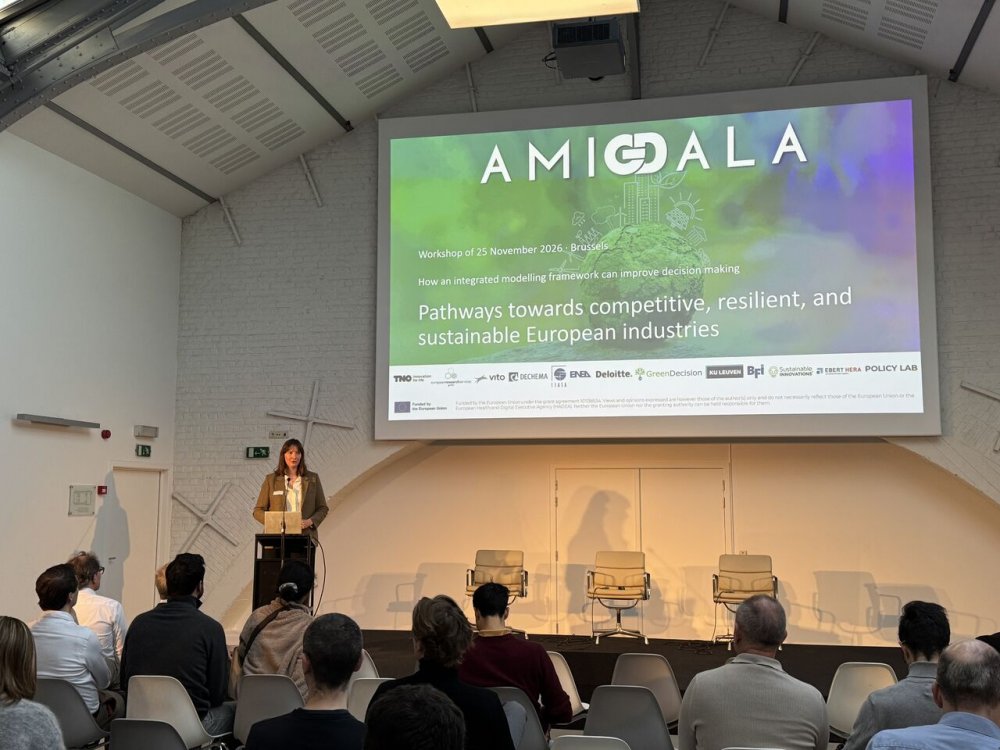
Stakeholder workshop
Both Wubbolts and Rusman noted that European collaboration has been a key factor in achieving impact. The project builds on several earlier, separate collaborations with European partners, which the team are now able to combine in a new way with European financing to achieve novel results. The consortium brings together partners from countries including France, Austria and Estonia, with expertise ranging from technology and modelling to scenario development and stakeholder engagement. The interviewees argued that while a similar exercise at national level would be useful, the multidisciplinary expertise required and the international nature of the challenges AMIGDALA addresses mean that sustainability and industrial competitiveness are best tackled at European level. To create globally impactful solutions, pan-European collaboration is needed.
How do we prepare young Europeans to work alongside robots and algorithms? Why should we measure radio waves with European partners? And how can medical institutions adopt artificial intelligence in line with GDPR? These are the sorts of questions we explore in our special article series, Knowledge Without Borders. Covering education, research and innovation, Neth-ER tells stories from across the European knowledge sector showing the impact of European collaboration and EU funding.
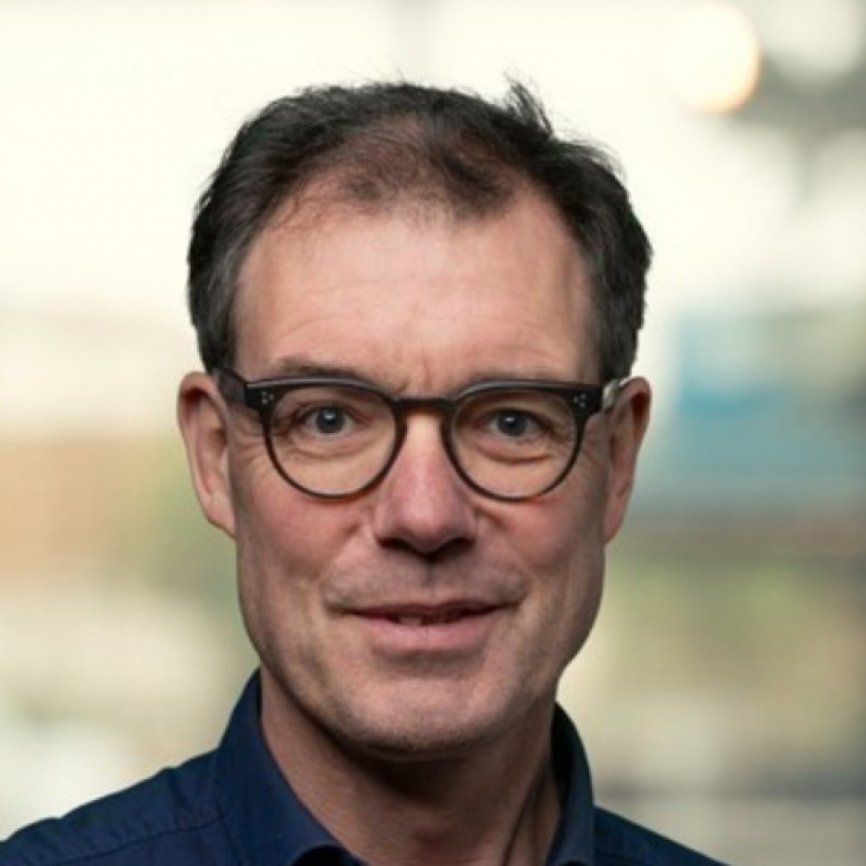 Frank Wubbolts is Senior Consultant for ‘Clean Competitive Industry’ at TNO. Drawing on experience in clean technology start-up, the global energy sector, and applied research, he helps translate society’s sustainability and resilience ambitions into competitive industrial development.
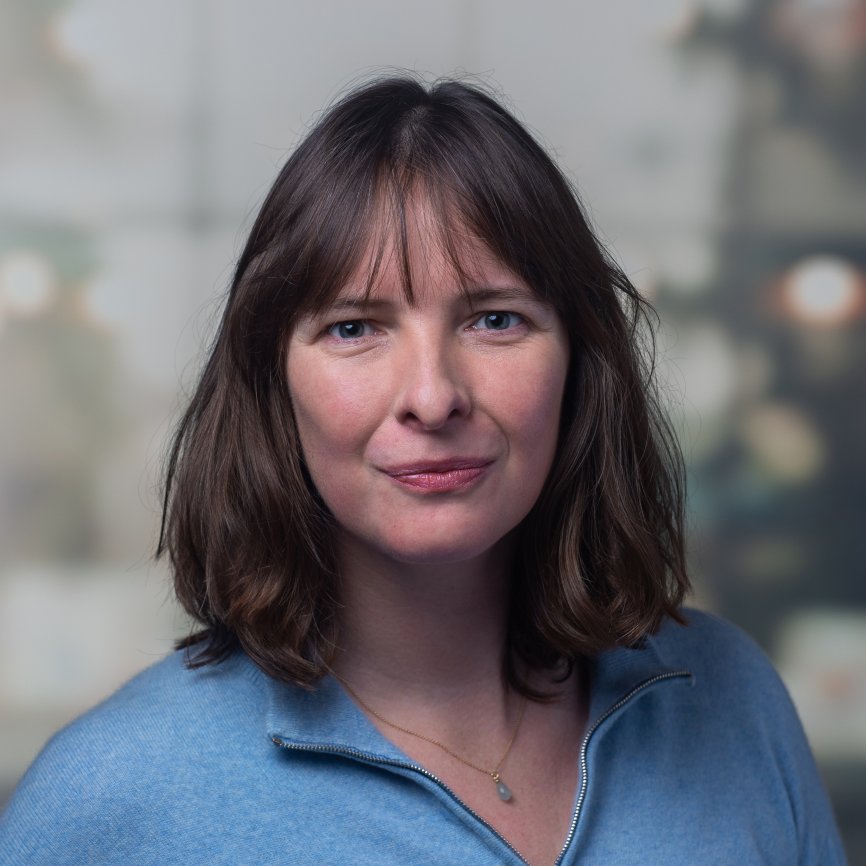 Andrea Rusman is Senior Project Manager at TNO working at the intersection of circular plastics, systems modelling and sustainability strategy. She works on linking different modelling perspectives to better understand how changes in materials, energy and the economy interact. A key focus of her work is translating these system-level insights into practical strategies for policymakers, industry and other stakeholders.
Wat staat er in 2027 op de Europese agenda voor onderwijs, onderzoek en innovatie?
Europees Parlement wil extra middelen voor Horizon Europe en Erasmus+ in de EU-begroting 2027
How can EU-funded drug repurposing give patients with rare diseases access to medicines faster?
Compromis in het Parlement: 200 miljard voor Horizon Europe, los van het ECF