26 oktober 2026
How can EU-funded drug repurposing give patients with rare diseases access to medicines faster?

Dominique Selier
Beleidsmedewerker
Stel uw vraag
Meer informatie nodig? Stel uw vraag aan één van onze medewerkers

26 oktober 2026
Beleidsmedewerker
Meer informatie nodig? Stel uw vraag aan één van onze medewerkers
One in twelve people worldwide is affected by a rare disease, yet treatments exist for only 7% of these conditions. For most patients, there is no treatment at all and often not even the prospect of one. Could existing medicines help close that gap? Neth-ER spoke with Prof. Dr. Peter-Bram 't Hoen of Radboud university medical center and Prof. Dr. Clara van Karnebeek of Amsterdam University Medical Center, who coordinate the Horizon Europe project SIMPATHIC together. Their international consortium is finding new uses for existing medicines, with patients in the lead.

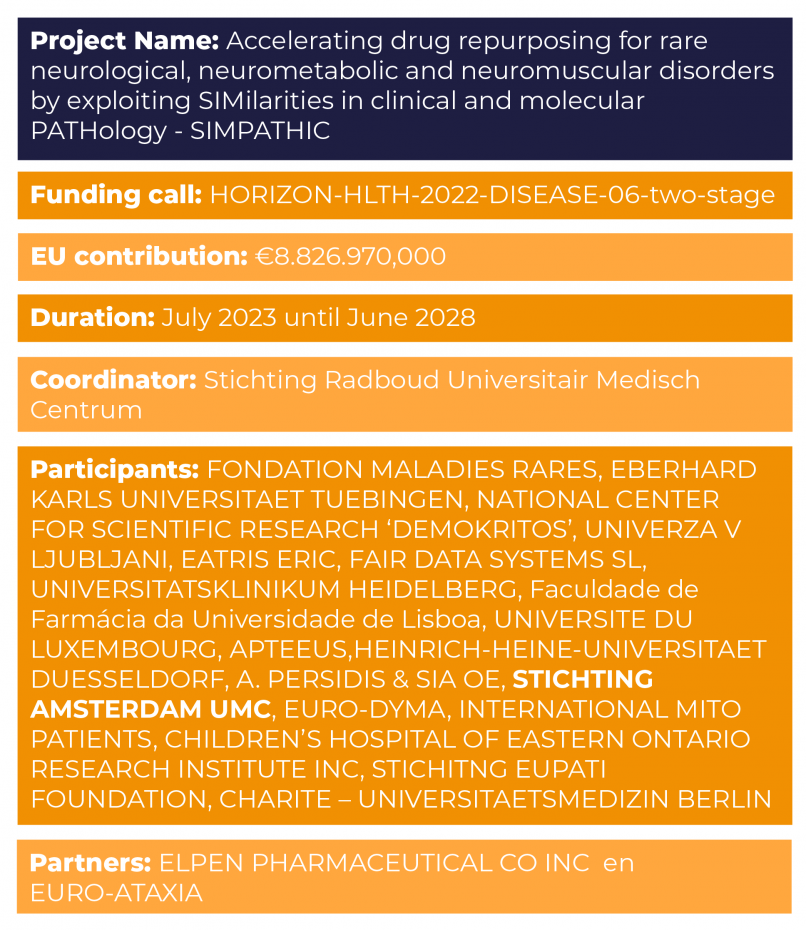
Drug repurposing means identifying new uses for medicines that already exist and have proven safe. This can make the road to treatment considerably shorter. “Gene therapies that can cure rare diseases will take many years to reach patients. Repurposing existing medicines can treat their symptoms and improve their quality of life much sooner,” the coordinators explain. SIMPATHIC, short for “Accelerating drug repurposing for rare neurological, neurometabolic and neuromuscular disorders by exploiting SIMilarities in clinical and molecular PATHology”, received EU funding under Horizon Europe's health call for rare diseases to do exactly that. Neth-ER spoke with Prof. Dr. Peter-Bram 't Hoen of Radboudumc and Prof. Dr. Clara van Karnebeek of Amsterdam UMC.

What makes SIMPATHIC unique? According to Prof. Dr. 't Hoen, the key to better care for rare diseases is identifying shared hypotheses and scientific mechanisms across different patient groups, while keeping the patient central. Radboudumc combines preclinical research with its role as sponsor of the clinical trial, while Amsterdam UMC conducts preclinical work and leads key parts of the trial set-up. By working with a broad European consortium that includes patient associations, SIMPATHIC brings together patients who might benefit from the same medicine. Seven different labs agreed from day one to use the same protocol. That made it possible to search for commonalities between patients with different rare diseases and to investigate new purposes for existing medicines. "Without harmonisation of protocols and approaches within our European consortium, this research would take many more years," the coordinators explain. As a result, healthcare providers can offer patients a suitable treatment much sooner.
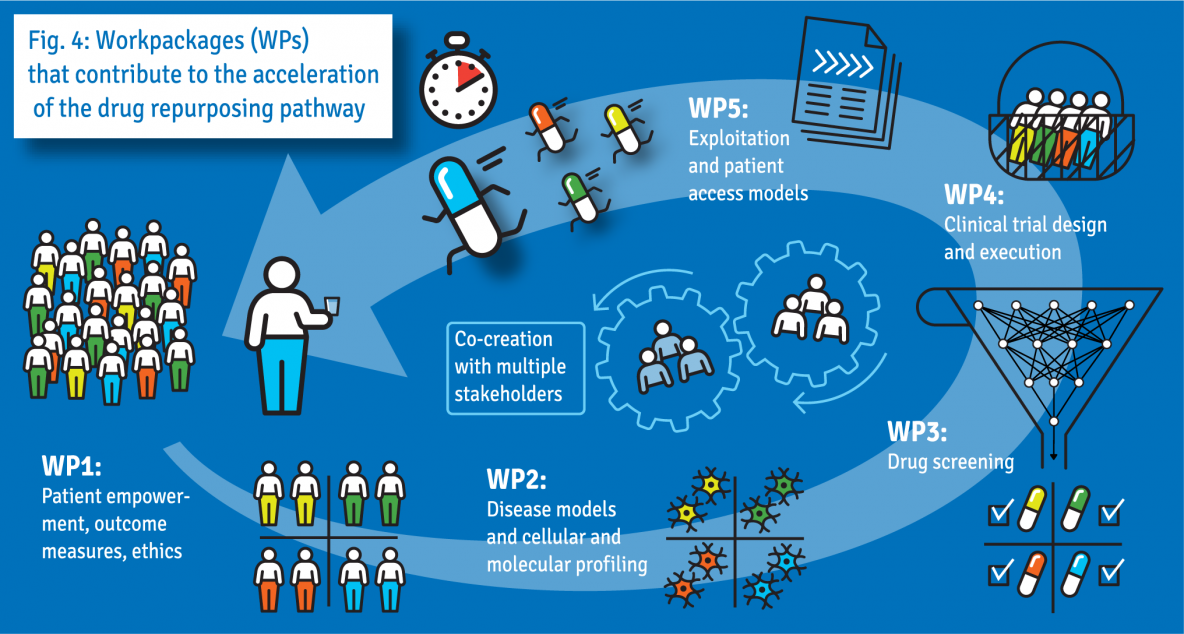
(c) Robert Vulkers/ComicHouse.nl
SIMPATHIC puts patients and their care at the center. "It is crucial that patients are heard and empowered," Prof. Dr. Clara van Karnebeek says. This is also in line with the European Commission's intentions for the project. Patient associations are full partners in the consortium and manage the 'patients in the lead' work package. This approach pays off. Speaking with patients directly and personally reveals aspects of their symptoms and possible treatments that medical professionals had not considered before. By giving patients a voice and connecting them to researchers, their experiences can be translated into scientific hypotheses, paving the way for screenings and clinical trials. Leadership is also shared across generations, with postdocs, young independent researchers and PhD students being given leading roles. In this way, SIMPATHIC is helping to train the next generation of researchers and clinicians.
SIMPATHIC is building results designed to be used long after the project ends. The consortium is standardising protocols for future clinical trials and has developed practical tools and training materials. Patients can use these to set up drug repurposing projects themselves, from fundraising to research into treatments. The consortium also trains patient representatives to develop their own manuals, so they can play an active role in research and care. Prof. 't Hoen and Prof. Van Karnebeek see this as the future: a patient-driven approach to finding solutions. To support that approach, the consortium is also developing a patient-centred ethical framework that can serve as a blueprint for new repurposing projects for rare diseases.
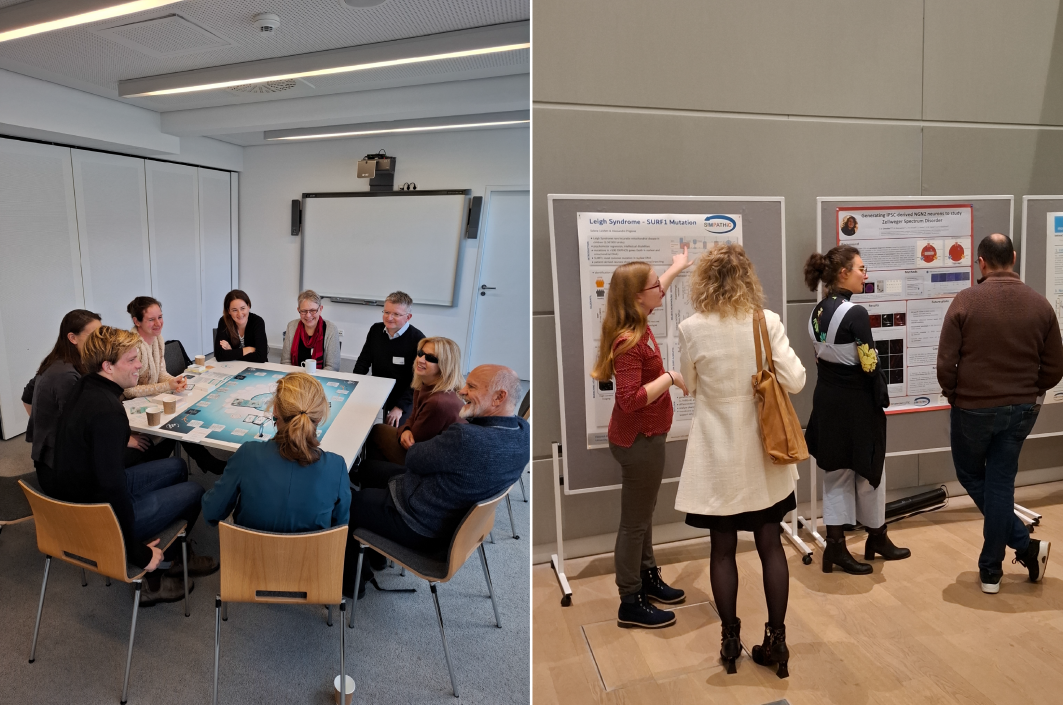
SIMPATHIC consortium plays the Repurpolis drug repurposing game in Dusseldorf in 2024 and one of the poster session in that same meeting
The most pressing question comes after the trial: how do repurposed medicines actually reach the patients who need them? Bringing medicine to market is costly, and for rare diseases the route is particularly complicated. For example, reimbursement depends on pricing and on a recognised indication, which currently differ across member states. Both UMCs therefore call for greater attention to drug repurposing and closer cooperation between EU member states, so that patients across Europe have a better chance of gaining access to these medicines.
In the meantime, SIMPATHIC is exploring routes to the market that do not depend on big pharma, for example through academic development and patient organisations. However, these routes cannot be financed by healthcare providers. Industry remains an important partner, but this type of trial is often less attractive to companies, so researchers cannot rely on industry funding to carry it out. "This is exactly why we need more funding from the European Union for clinical trial research and rare diseases, including phase 3 clinical trials," the coordinators argue. The case of Leigh syndrome shows why this matters. A group of researchers recently identified the existing medicine sildenafil as a potential treatment for this rare and often fatal metabolic disease. Building on these findings, SIMPATHIC researchers are now setting up an innovative trial to generate evidence on its effectiveness and safety. However, investigator-initiated studies like this one depend on European funding to move forward.

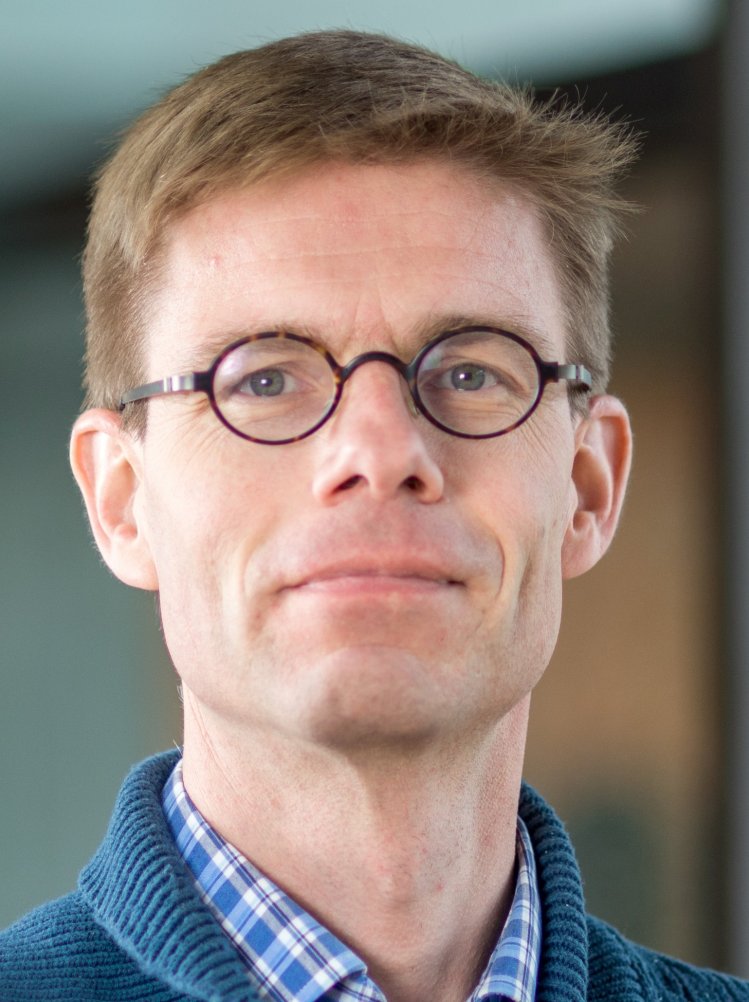 Prof.dr. Peter-Bram ’t Hoen is professor of Bioinformatics at Radboud university medical center Nijmegen, the Netherlands. He is leading the Radboudumc research program on Neuromuscular Disorders and is dedicated to the advancement of personalized medicine approaches for myotonic dystrophy and other rare neuromuscular disorders by integrative use of -omics and clinical data. ’t Hoen is coordinator of the European SIMPATHIC project aiming for acceleration of drug repurposing for rare neurological, neurometabolic and neuromuscular disorders. Since data from rare disease patient is scarce and fragmented, he is dedicated to making data Findable, Accessible, Interoperable and Reusable and developing infrastructure for federated analysis of personal data. To this end, he is actively contributing to Dutch infrastructures such as X-omics, HealthyData and HealthRI, and international infrastructures including European Rare Diseases Research Alliance (ERDERA), EURO-NMD and EATRIS. He is Open Science ambassador in Radboud university medical center and member of the steering board of the Dutch regieorgaan OpenScience.NL
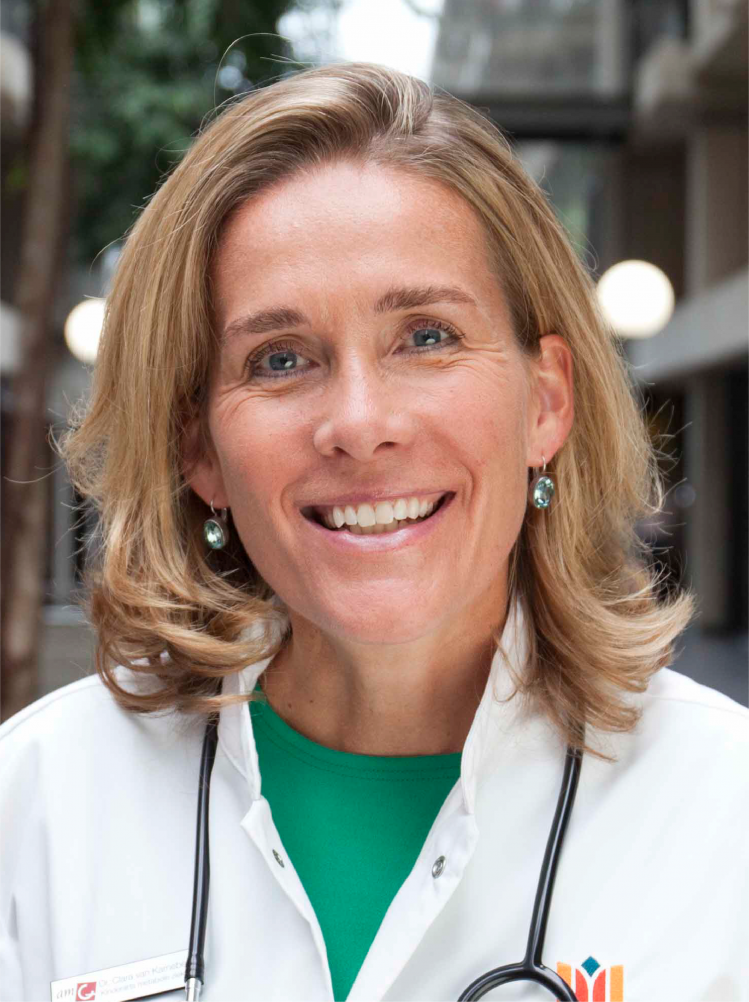 Professor Clara van Karnebeek is Director of the Emma Personalized Medicine Center www.emmacenter.nl and principal investigator at the Amsterdam University Medical Center, The Netherlands and affiliated with the University of British Columbia in Vancouver Canada. Clara’s work as a pediatrician and biochemical geneticist focuses on early diagnosis and innovative treatment of neurometabolic diseases in a P4-medicine model. Her international team integrates genomic and metabolomics technologies to unravel the cause of degenerative brain conditions in children and adults, discovering novel genetic conditions and treatment targets using human model systems. Drug and nutritional repurposing are preferred strategies, and Clara co-leads the SIMPATHIC repurposing consortium (www.simpathic.eu).She is the Director of United for Metabolic Diseases (www.umd.nl), a Dutch consortium uniting all 6 academic metabolic expertise centers and the patient organizations to optimize research and care. Clara has founded the Jeroen Pit Huis https://hetjeroenpithuis.nl/ as an innovative model of transmural care for children with medical complexities in Amsterdam NL, and heads the Emma Pediatric Palliative Care team.